










Kent once supported the largest hop gardens in the country, but sadly a steady decline over
the years has seen a big reduction in their number. However, the signs of a truly joyous
Kentish story are still to be seen as Robin J Brooks found out on a walkabout…
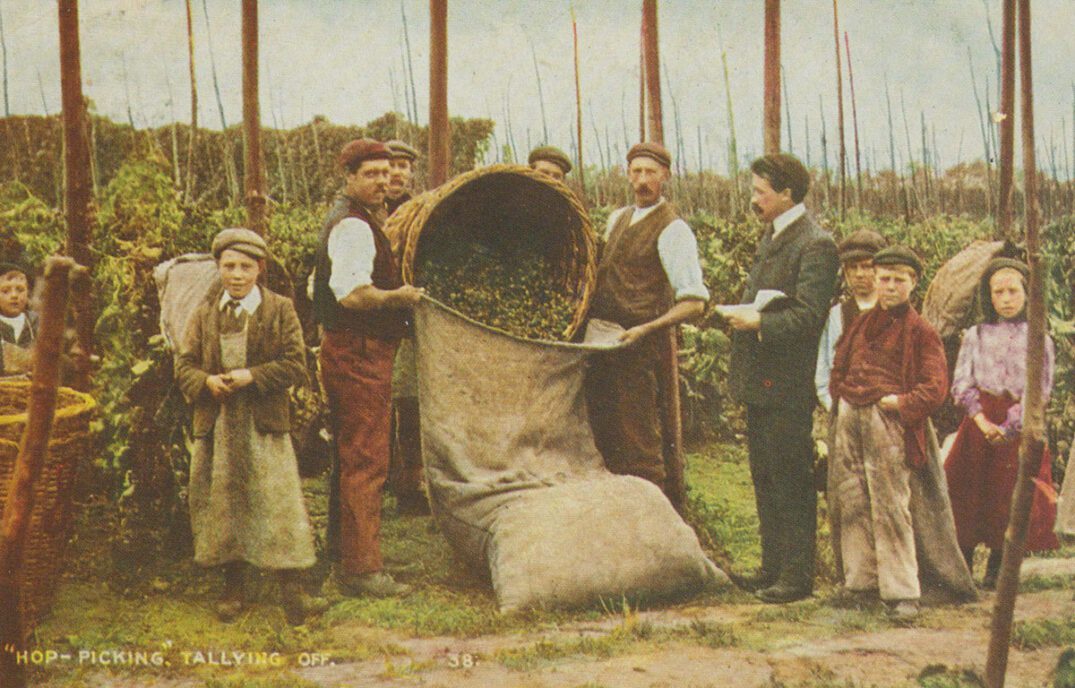
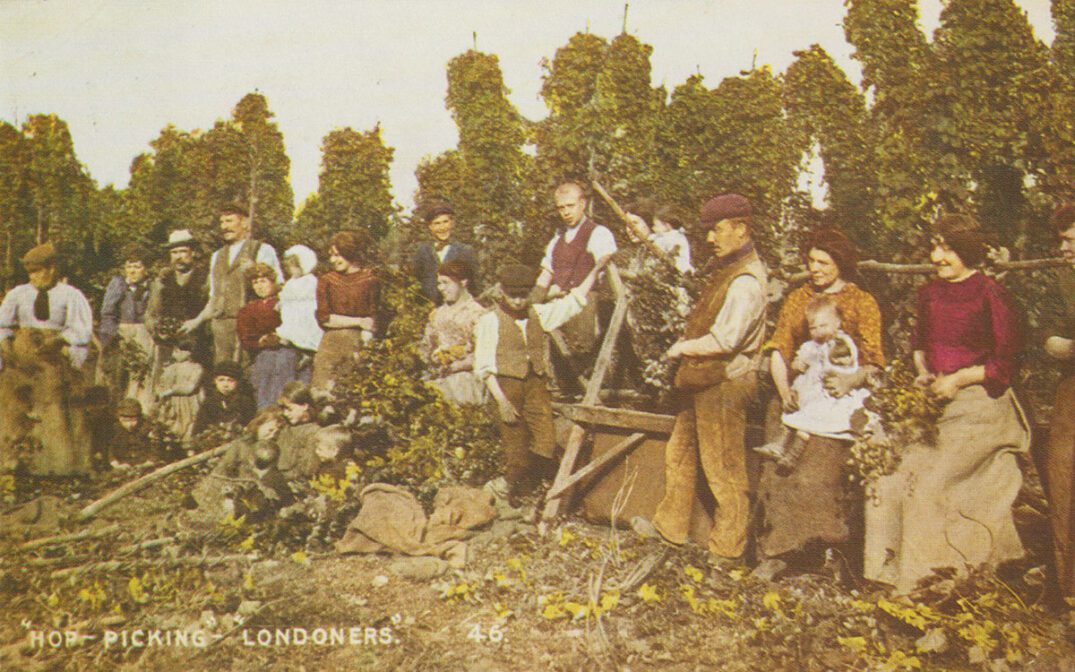
They came in their thousands every September and October. Entire families from London descended on Kent for the annual hop picking season, bringing with them everything bar the kitchen sink.
Several generations of the same family arrived to enjoy what for some was an annual holiday as well as the chance to earn money. Even bringing some of their furniture, they left their homes to live very sparsely in whatever accommodation the farmer provided for as long as six weeks.
Coming by train from London Bridge, they arrived at many destinations in Kent, such as Headcorn, Paddock Wood and Goudhurst.
The trains that brought them were called ‘Hoppers Specials’ and it was the duty of Southern Railway to arrange an entirely different schedule to the normal one to accommodate the pickers.
With the specials starting from London Bridge Station, the platforms would be full of chatter and laughter as the pickers awaited their trains. Once on board it was full steam ahead for the ‘Garden of England’.
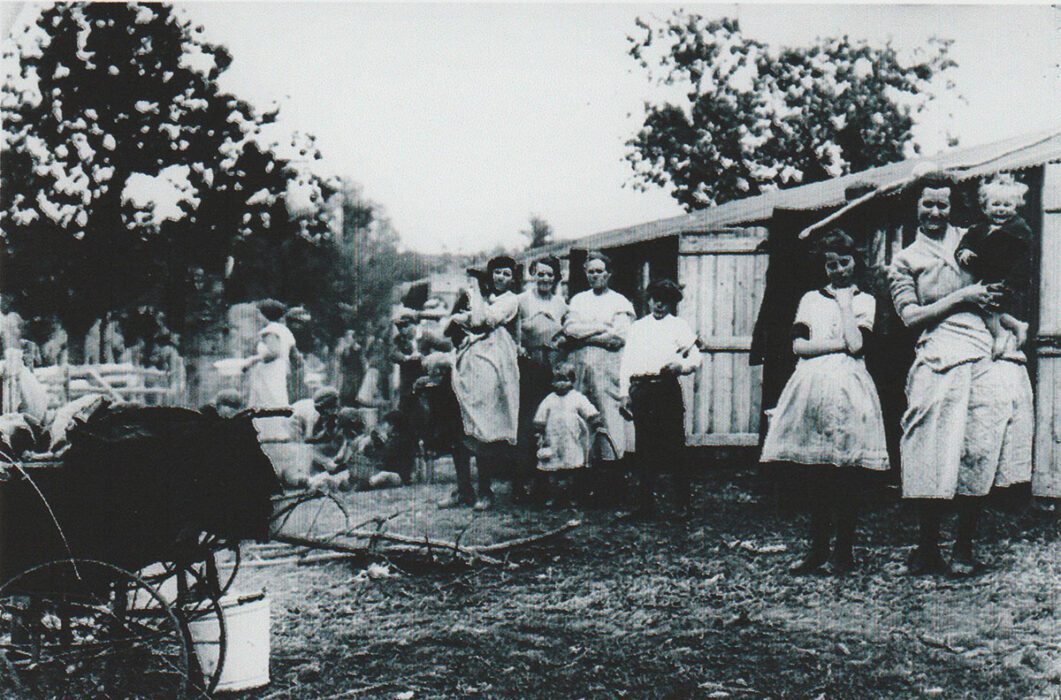
On arrival at their destination the families would be met by farmers who would take them to the farms and their temporary living quarters. Just how temporary depended upon the farmer’s generosity, but most were primitive. It could be tents or it could be one of the barns, which they would share with animals.
Some farms actually built what became known as ‘hoppers huts’ offering a little more comfort. The roofs were mainly constructed of corrugated iron while the body of the hut was brick. They had an earth floor and no electricity – lighting was either by candles or paraffin lamps – while bodily functions were catered for by a very basic toilet block.
There were no cooking facilities either. This had to be done on open fires outside, which meant that all the pots, pans and cutlery had to be brought from the pickers’ own homes.
Cooking outside was not usually a problem as weather most always proved to be fine and warm.
It was from Flanders that the first hops arrived in the Maidstone area around the end of the 15th century. Beer had been brewed and drank before this time but had then been flavoured with herbs and other dubious items!
This was known as ‘un-hopped beer’ but the addition of hops imported from France saw the consumption of beer increase on a massive scale. So much was consumed that by the year 1655 hops were being grown in the UK in 14 counties, with farmers using more and more acreage to grow what was originally called ‘a salad plant’.
This trend continued through the 18th century, when production reached a peak at 77,000 acres. The 19th century was the golden age of the hop, with every brewery clamouring for increased production.
In Kent, the late summer and autumn would bring the smell of sulphur to the air as the hops were harvested and then dried out in oast houses. It was a smell that either delighted or repulsed.
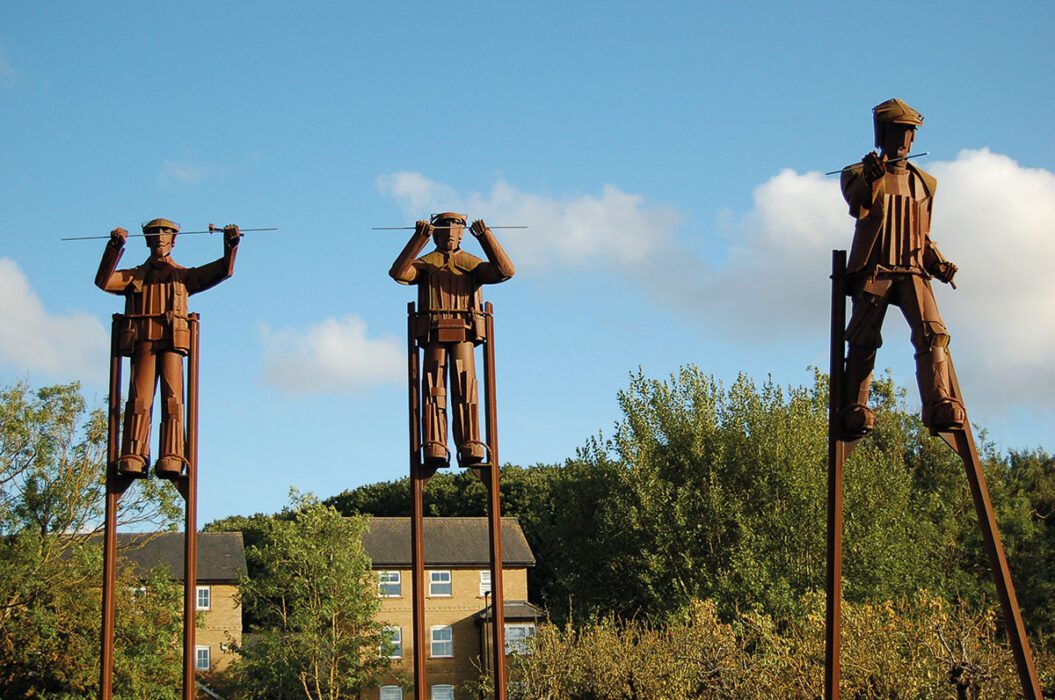
At this time of the year Kent was transformed into a green maze as the hops matured, all thanks to some of the farm workers who had become known as ‘Stilt Men’. Strapping the stilts to their legs gave them the extra height needed to ‘twiddle’ the bines around the overhead wires.
Once the hops had grown it was time to pull hard on the stem and pull the bine down ready to begin picking off the hops (or scratching as it was often called) and putting them into the hop bin to be collected by the ‘tally man’, who put them into a ‘hop poke’ (a large hessian sack).
Jumping briefly to the 20th century, it was many a morning that this writer got very wet in his youth when the bines were covered in overnight dew!
The early 18th century saw an estimated 250,000 hop pickers arrive in Kent but, as stated, in the early days the accommodation offered by the farmers was far below what could be called fit for hygienic living.
One of the worst tragedies attributed to this fact was in September 1849 when an outbreak of cholera caused by bad drinking water killed 43 hop pickers at a farm in East Farleigh. Their fate was first remembered by the erection of a wooden cross, but today that has been changed to a concrete memorial.
This and other diseases had not gone unnoticed by the church, and specifically by the Reverend JJ Kendon. He had been visiting Goudhurst in the early 1860s and on a visit to a local hop garden was appalled at the conditions the pickers lived in. He immediately began a campaign for improvements, being joined in 1865 by the Reverend JY Stratton. Both began a joint campaign to improve the living conditions, which a year later led to the formation of the Society for Employment and Improved Lodgings for Hop Pickers. Such was the impact that within nine years the society had a team of over a dozen missionaries.
The cause for better lodgings for the London hop pickers took another step forward in 1898 when the local priest for Stepney in London, Father Richard Wilson, began to wonder why his flock was seen to be halved between August and October every year. He mentioned this fact to one family, who promptly asked him to join them on what was their annual holiday spent in the hop gardens of Kent.
For two years he joined the London exit, becoming more and more devastated by the living conditions and determined to do something about the situation. In 1897 a family, including the Reverend Wilson, had arrived at a farm at Five Oak Green, a village close to Tonbridge. Looking around for a property to act as a holiday home, he found a cottage to rent which would suit the purposes admirably. At a cost of 2s 6d a week, the place was soon full of cots and beds for the use of the babies and children of the pickers if they fell ill.
It soon became known as ‘Little Hoppers Hospital’, coming into use almost immediately when an outbreak of smallpox spread through the pickers. With several of the pickers qualified to do nursing, the next year saw a larger property turned into a hospital, by which time the first bye-laws regarding the accommodation for hop pickers were adopted by Bromley (then in Kent) under the Sanitary Acts Amendment Act 1874.
Though this was a great improvement on the conditions, Father Wilson wanted to go further and do more for the families. In 1910 he noticed that the Rose and Crown public house in Five Oak Green was up for sale. Making enquiries, and with all the legal requirements satisfied, he purchased the building and turned it into the Hoppers Hospital, which again provided medical and social help for those who needed it during their stay in Kent.
For 60 years the building served as a hospital, and is now a Grade II-listed building still owned by the Stepney-based charity The Red House that Father Wilson set up. Its role, however, has changed to that of a holiday place for groups from London’s East End.
The establishment of the hospital and the general upgrading of the living conditions did not come a moment too soon for the pickers, but while most of the time spent picking the hops was carefree and fun, there were occasions of sadness.
One particularly tragic incident was during the days of horse and cart transportation. On 28 October 1853, after a long day in the hop garden, a group of pickers were returning to their accommodation by horse and cart when, crossing Hartlake Bridge over the River Medway in Golden Green, near Hadlow, the wooden structure gave way under the weight plunging many into the cold and swollen river.
A total of 30 people, including children as young as two, drowned and were later buried in a mass grave in St Mary’s Church, Hadlow.
An inquest held later at The Bell Inn, Hadlow, brought a verdict of accidental death, with the Medway Navigation Company paying funeral costs and the erection of a monument to remember the victims.
Many years afterwards, wreaths are still thrown into the river on every anniversary of the tragedy, and a memorial service is held in the church.
The annual migration of Londoners to Kent for the hop picking season continued for many years, but signs of change came in 1922 when the first hop-picking machine arrived from America.
In this instance it was not suitable for the job intended, but by the 1950s, with the arrival of better machines, more farmers were choosing to use them in favour of hand picking.
At the same time, the introduction of lager beer to the UK gained instant popularity among beer drinkers, causing the demand for hops to fall. This continued throughout the 1960s and 1970s, leading to far fewer hop gardens left in the county. Thus no longer were so many people needed to pick as the mechanical era had also arrived.
Today, if you look carefully as you travel through rural Kent you may still see hops growing plus the occasional hoppers hut, which some farmers may have retained for posterity.
With the blossoming English wine industry currently finding favour, many farmers have now turned their hop fields into vineyards. Where once the hop steadily climbed up the strings you will see grapes growing along a shoulder-length wire.
As the time comes to harvest the grapes, will it bring the same pleasure and the way of life that existed in the season of hop picking? I somehow doubt it…
HOP FACTS & KEY KENTISH DATES
First hops arrive in Kent
The first hops arrived in the Maidstone area around the end of the 15th century, from Flanders.
Peak production
Production reached a peak at 77,000 acres. The 19th century was the golden age of the
hop with every brewery clamouring for increased production.
Tragedies in Kent
In 1849 an outbreak of cholera from bad drinking water killed 43 hop pickers at a farm in East Farleigh. Their fate was first remembered by the erection of a wooden cross, later changed to a concrete memorial.
On 28 October 1853, the Hartlake Bridge gave way killing 30 people.
Health & hospitals
Reverends JJ Kendon and JY Stratton campaigned for improvements in hop pickers living conditions, leading to the formation of the Society for Employment and Improved Lodgings for Hop Pickers.
In 1897 Reverend Wilson founded the ‘Little Hoppers Hospital’ for pickers who fell ill, and in 1910 he formed the Hoppers Hospital, providing medical and social help for those who needed it during their stay in Kent.
The end of hand hop picking
In 1922 hop-picking machine arrived from America, and by the 1950s, with better machines, more farmers were choosing to use them – the end of hand hop picking had begun.
Comments are closed, but trackbacks and pingbacks are open.